
Betnjet Casino Games and Software: How to Judge the Library Before You Play
The reason to look past the lobby design is straightforward. A casino does not build every game it hosts; it licenses titles from studios, and those studios arrange the testing that underpins each release. Checking which names appear in the Betnjet Casino catalogue tells you which testing regimes and developer reputations are in play. It also shows whether the mix is diverse or concentrated in a handful of suppliers. Concentration is not automatically bad, but it narrows what you can compare, and it means one studio’s design choices set the tone for much of the library.
Dazzle Casino: Creating an Account and Getting Verified
Voodoo Dreams Casino Bonus: Who Can Claim and What Voids the Offer
See also:
- What the software provider list tells you about a casino’s games
- betnjet casino: offers, games
- How to find the provider names behind the games you see
- What different categories of provider signal about fairness and integrity
- Checking blackjack, bingo and other categories without assuming variety
- Testing a game for demo mode and in-game safer gambling tools
- Common questions about the games at Betnjet Casino
- Keeping play under control
What the software provider list tells you about a casino’s games
A long catalogue says less than a short list of known studios
The number of games on a casino’s front page is easy to inflate. Studios supply games to many operators at once, so a site can display thousands of titles drawn from a modest number of providers. The provider list is the more informative figure. If the names on it are studios you can recognise from other operators, you can follow a particular game from one site to another and compare how it behaves in each place. If the list is thin on recognisable names and heavy on titles you cannot trace to any studio, the catalogue is difficult to assess from the outside, whatever its size.
What a provider name actually tells you, and what it does not
A named developer tells you who built the game and who is responsible for its published rules, its return-to-player configuration and its maths. That is useful because it identifies a source you can look up independently, and several jurisdictions and testing houses publish information about licensed suppliers. It does not certify that the version in front of you is configured the same way as another operator’s copy. Studios often let operators choose between settings, and the game’s own information panel is the place to see what applies here. Nor does a famous name prove the game runs smoothly on your phone. The useful check is a short session in the actual interface: open a game, let it load on mobile data, and watch whether the controls remain reachable without pinching or scrolling sideways.
For betnjet casino, the provider list is worth reading alongside the game screens themselves. Match a studio to a title, confirm the rules and paytable shown in the game menu, then judge the mobile layout. That sequence gives you a concrete basis for deciding whether the library suits you, rather than trusting a headline count.
betnjet casino: offers, games
How long does a player have to meet the conditions at Betnjet Casino?
| Brand | Details |
|---|---|
| betnjet casino | Clearing betnjet casino’s x35 welcome wagering within seven days is easier with a planned game choice than aimless browsing. |
The sheer breadth of a slots and table games library can hide the fact that bonus rules favour certain titles. At betnjet casino the welcome package, up to £1,000 plus 250 free spins, demands x35 turnover before the seven-day deadline. Plan which games you will play to clear it, because browsing without a plan burns the clock.
This distinction clarifies which operator offers genuine variety within preferred genres rather than just volume, helping you target platforms with compatible gameplay structures.
How to find the provider names behind the games you see
Provider names sit in the info panel, not the lobby tile
A game tile’s artwork reveals very little about the studio behind it. A title made by a studio that publishes its certification testing sits visually beside one assembled from a template library, and the lobby artwork gives both the same polish. The name you need is usually one click deeper: open the game’s information page, or the small info icon on the tile itself, and look for a field labelled provider, developer or software. In many lobbies that same label also appears as a hover state on desktop, or beneath the title on mobile. Provider filters in the lobby navigation are the faster route when one exists, because selecting a studio shows you its catalogue and confirms at a glance that the site is grouping games by the company that actually supplied them.
Cross-checking the name and knowing when it stops helping
A provider label identifies the studio that supplied the game; it does not tell you which company runs the site or holds the licence under which the content is offered. Keep those two roles separate when you read a game page. Where a title carries more than one name, as with branded games built under licence from a film or television property, the studio name is the one that matters for how the game was constructed, and the brand name is only the theme. Game sheets vary between suppliers, so the absence of a field in one view does not mean the game is uncredited; check the tile, the game info screen and any dedicated provider page before drawing a conclusion. If the identity remains unclear after that, you have learned something usable about how transparently the library is presented.
What different categories of provider signal about fairness and integrity
Provider categories tell you different things, and the difference matters more than length of any list. The useful test is what a studio’s name actually verifies, since a provider logo confirms where the code came from, not that the game is fair, well made or suitable for you. Three broad groups sit behind the games on a site such as betnjet casino, and each carries a different kind of assurance.
| Provider category | What the name typically establishes | Common false assumption | What to inspect instead |
|---|---|---|---|
| Established multi-market studios | Games are produced to a set standard and supplied to many operators under supply agreements | That every title on the site has been tested identically | Look for a named testing house in the rules or help screen, not just the studio logo |
| Live-casino specialists | Real-time dealer play, streamed tables and presenter-led formats | That live footage proves the outcome is random | Check the rules screen for the shuffle or randomisation method and the stated testing information |
| Smaller or in-house titles | Operator or developer-specific content that may not appear elsewhere | That an unfamiliar name means a rigged game | Read the accessible information, such as the studio’s own site and any stated testing, before relying on the name alone |
Established studios tend to publish game rules, return figures and testing arrangements, which is why their presence is a reasonable starting signal. It is not proof of integrity. A well-known logo can sit above a title whose settings have been adjusted for a particular market, and the logo will not tell you that.
Live specialists raise a separate question. The dealing is visible, but the randomness of the shuffle and the systems behind the stream are not. Visible cards answer a different worry from the one about the odds. For any category, a named testing organisation in the game’s own information is worth more than the studio’s reputation.
Smaller studios are not automatically weaker. An unfamiliar name often means a newer supplier, not a compromised one, and its titles may carry the same stated testing. Treat the category as a clue about how much documentation to expect, then read the game’s help screen. That is where the specific claim sits.
Checking blackjack, bingo and other categories without assuming variety
Variety has to be counted, not inferred
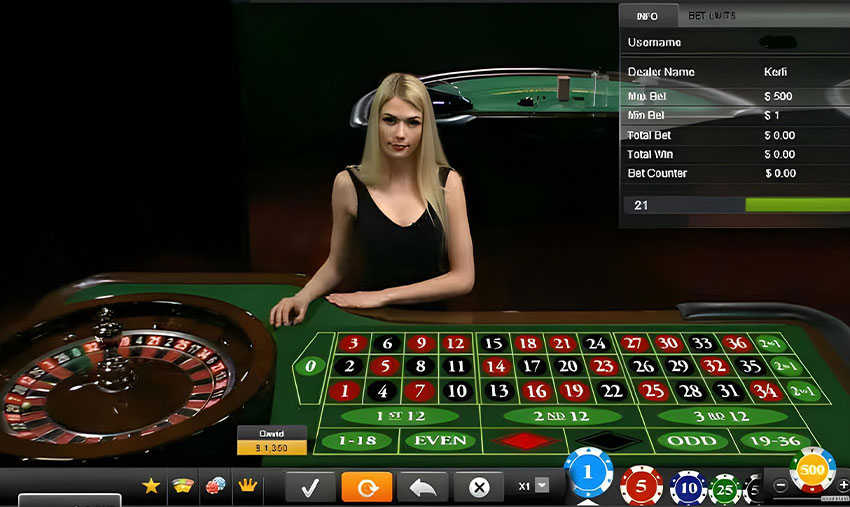
A lobby button labelled blackjack proves only that the category exists. Whether it holds one table or a dozen variants, each with different rules, is a separate question. Open the category and count what is listed before assuming coverage. Look at the table names rather than the tiles: two cards headed "Blackjack" may be separate variants with different rule sets, or the same game offered in different formats. Read the in-game rules screen to tell them apart. Cards, the dealer’s draw rules and side-bet options are the parts that change how a round behaves; a familiar name alone does not.
Bingo-style games deserve the same treatment. The label can cover different mechanics: ticket-based rooms, pattern-matching games or instant-style formats where results are revealed immediately. Check which structure you are being offered before forming an expectation of a scheduled room. A provider listed for one format has not necessarily supplied the other.
Provider names as a sorting tool across categories
Provider attribution does some of the work here. When the developer is shown on a game tile or in the information panel, the same studio name appearing across blackjack, bingo-style titles and other categories suggests a broad catalogue. A thin spread of names in one category is reason to look more carefully at what is actually there. None of this establishes fairness on its own. It tells you whose content is in the lobby and therefore which rule documentation to read.
A practical approach is to open the smallest category first. Sparse listings are easier to judge honestly than a wall of slots. If a category contains only a handful of titles, the lobby does not really cover it, and you can decide whether those few suit you before spending time elsewhere.
Testing a game for demo mode and in-game safer gambling tools
Games from different providers can look alike and still differ in whether they offer a practice mode and where they place their limits. The reliable way to find out is to check the information panel and the in-game menu in turn, then test whatever you find.
Use these steps:
- Check the tile and description for a demo label. If one appears, launch the practice version and confirm that the displayed balance is a practice balance, not your real funds.
- Open the in-game settings and scan for a session timer, reality check, stake limit or loss limit. Labels differ across providers, so examine each tab. Note whether the control is applied inside the game or only through your account area.
- Activate the control at the lowest setting. Set a short interval and wait for the reminder, or attempt a bet above your limit. A response confirms the tool works; silence leaves it unconfirmed.
A demo shows that the game can be tried without staking; it does not show that the game has passed independent fairness testing, nor that the operator is licensed for your market. A working timer shows that the provider has built a reminder into the interface; it does not show that the operator’s wider policies are adequate. Those assurances come from testing records and the regulator’s register, not from the game window.
When a game offers neither feature, compare it with a second title from the same provider. Provider-wide patterns are a better guide than a single game, and they help you decide which studios to favour when in-game controls matter to you.
Common questions about the games at Betnjet Casino
Can I stop a round after the result appears but before I confirm acceptance?
No. Once the game has generated and displayed an outcome, the round is settled; there is no acceptance step that would let you decline it. The displayed result is the record. If you want to pause rather than continue, use the in-game controls or leave the session instead of trying to reverse a completed round.
How can I tell what a game showed if the numbers or selections were on screen only briefly?
Check your play history for the round reference and its recorded outcome first. That log is the casino’s own record and is what a support query would be assessed against. Reopening the game does not replay the previous result, so keep the reference rather than relying on memory of the animation.
What happens if I dispute a recorded result on a Betnjet Casino game?
Start with the game round ID and the time shown in your play history, then contact support in writing. Each round carries its own reference, so a screenshot alone identifies less than the logged record does. Ask which provider supplied the game, because that studio, not the casino, typically holds the round data used to reconstruct the outcome.
Keeping play under control
Decide in advance what does not get used for gambling, such as rent, bills or savings meant for something else. Set play money apart and stop at its end, without a top-up from any other pot. Betnjet Casino’s deposit controls can enforce part of that plan, though they govern deposits, not spending inside a game. Use the in-game time display as a prompt, not a target to beat. Under UK rules, play is for over-18s only. GAMSTOP supports self-exclusion, GamCare and BeGambleAware provide free help, and the National Gambling Helpline answers on 0808 8020 133. A break taken willingly is far cheaper than one forced by loss.